Launch price — $37 instead of $57. Ends in --d --h --m --s
🇯🇲 INSTANT DIGITAL DOWNLOAD — read it on any phone, tablet or computer, or print it at home
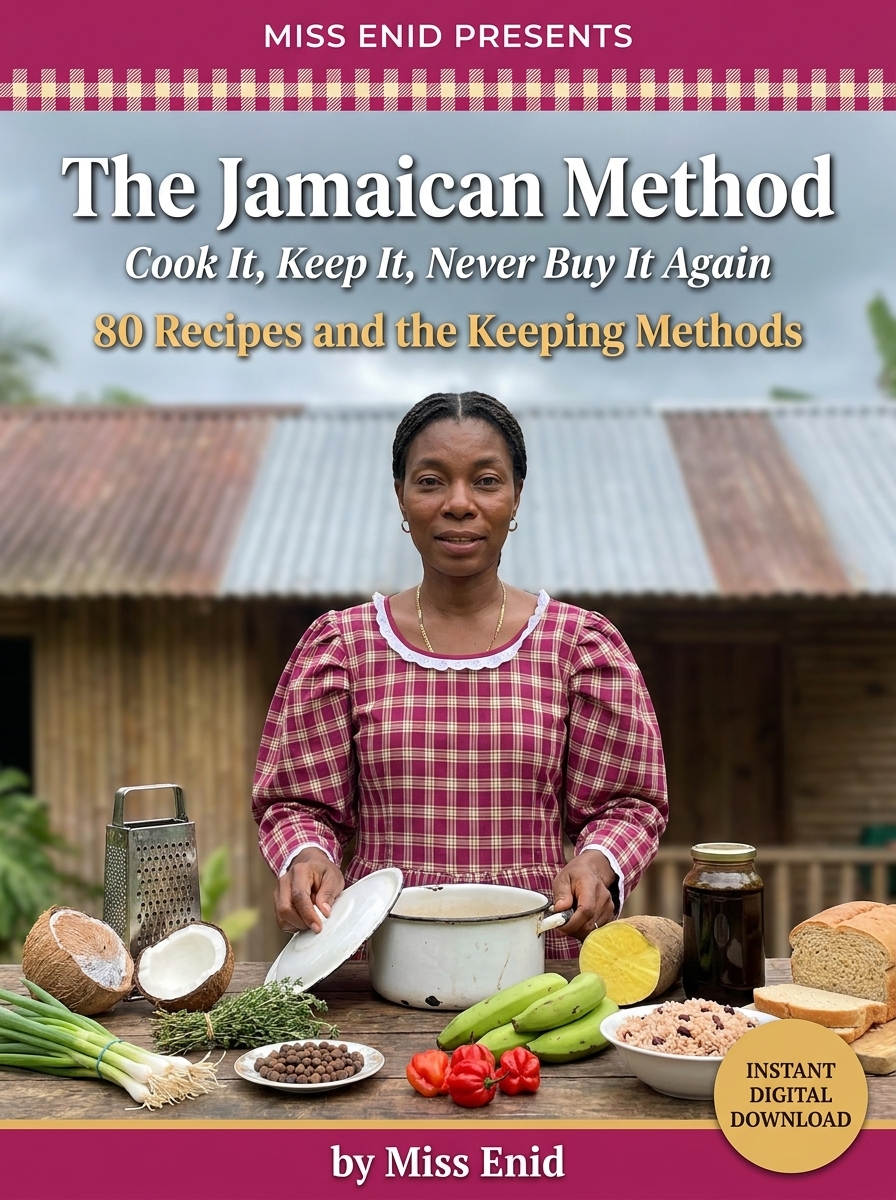
The Jamaican Method — Cook It, Keep It, Never Buy It Again
Miss Enid presents

The Jamaican Method

Cook It, Keep It, Never Buy It Again
Your food is not spoiling because you are careless. It is spoiling because nobody ever showed you how a kitchen in a hot country keeps it — and the sixteen things you keep re-buying in jars and bottles are quietly running to somewhere around a hundred dollars a month.
I wrote down the whole method. Eighty dishes with real measurements, the keeping methods nobody teaches, and the ledger with the arithmetic in the open so you can check every number at your own shop.
✓ Instant download · ✓ Large print, big numbered steps · ✓ 7-day money-back guarantee

The money is not leaving through the checkout

It leaves through three places, and two of them are not even purchases.

1. The bin

Half a cabbage gone soft. The greens you bought on Saturday. The pot you meant to eat on Tuesday. Food does not spoil from age — it spoils from air, water and heat, and a country kitchen controls all three because it had to.

Part One: eight chapters on keeping food — including a whole chapter on keeping it with no current at all.

2. The jar

Coconut milk. Browning. Jerk marinade. Pepper sauce. Ginger beer. Hard-dough bread. Sixteen things that come home in a jar or a bottle every month — and every one of them is a Saturday morning and a few cents.

Part Three: all sixteen, made from scratch, each with the shop price and the real cost side by side.

3. The plate

Buying the expensive protein to be the whole dinner. Saltfish is nine to fourteen dollars a pound now — so we use a quarter-pound to flavour a plate for four, and nobody at the table feels short-changed.

Parts Four and Five: one pot that honestly feeds a house for three days.

Six of the sixteen — with my receipts

The whole ledger is the last page of the book. Here are six lines of it, at the prices I paid.

What you buyWhat the shop chargesWhat it costs me to makeA month
Coconut milk (4–8 cans)$1.80–3.00 a canOne dry coconut, $1.50–2.50, gives two cans of thick milk — plus the oil and the grated coconut, free≈ $5
Browning$2.50–4.00 a bottleA quarter-cup of sugar. Pennies.≈ $3
Ginger beer (2–4 packs)$5.00–8.00 a packAbout $2.00 of ginger, sugar and lime for the same amount≈ $10
Hard-dough bread (2–4 loaves)$4.00–6.00 a loafAbout $1.00 of flour, sugar and yeast≈ $10
Solomon Gundy$6.00–9.00 a jarAbout $3.50–5.00, and it makes more≈ $4
Coconut oil$6.00–10.00 a jarThe same coconut you already milked. Cost already paid.≈ $7

Add all sixteen and a household that buys them regularly is spending around $85 to $110 a month — roughly a thousand to thirteen hundred dollars a year.

Now the honest part, my dear. Nobody buys all sixteen every month, and my shop is not your shop. So the book does not hand you a number — it hands you the arithmetic, item by item, and a blank column. Price the six you actually buy. That is your real figure, and it is the only one that counts.

Get the book — $37

Nothing in this book says you have been doing it wrong

You have been feeding people for forty years. You know your own kitchen. A good part of this book you already do, and you do it well — and where your way differs from mine, your mother probably had a reason for hers.

This is not a list of your mistakes. It is what one kitchen in one hill district does, and — this is the part that matters — why. The mechanism underneath. So you can take the three things that are useful to you and leave the rest on the page without a second thought.

“We threw nothing away because everything grew. Not because there was nothing.”
— Miss Enid

And let me say the other thing plainly: this is not poor people's food. It was rich food, cooked by people who did not go to a shop for permission. That is an entirely different thing.
What makes this different

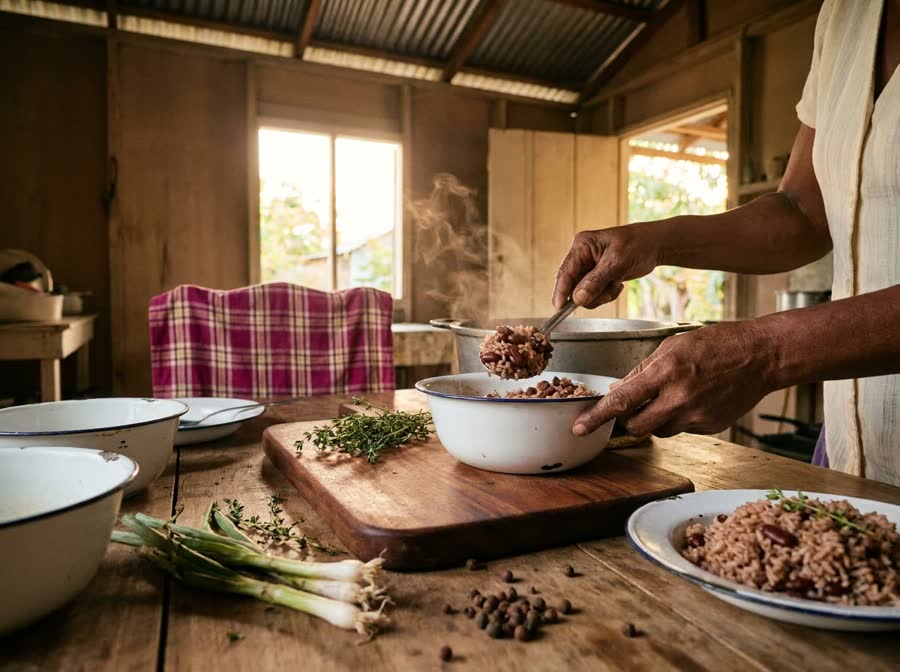
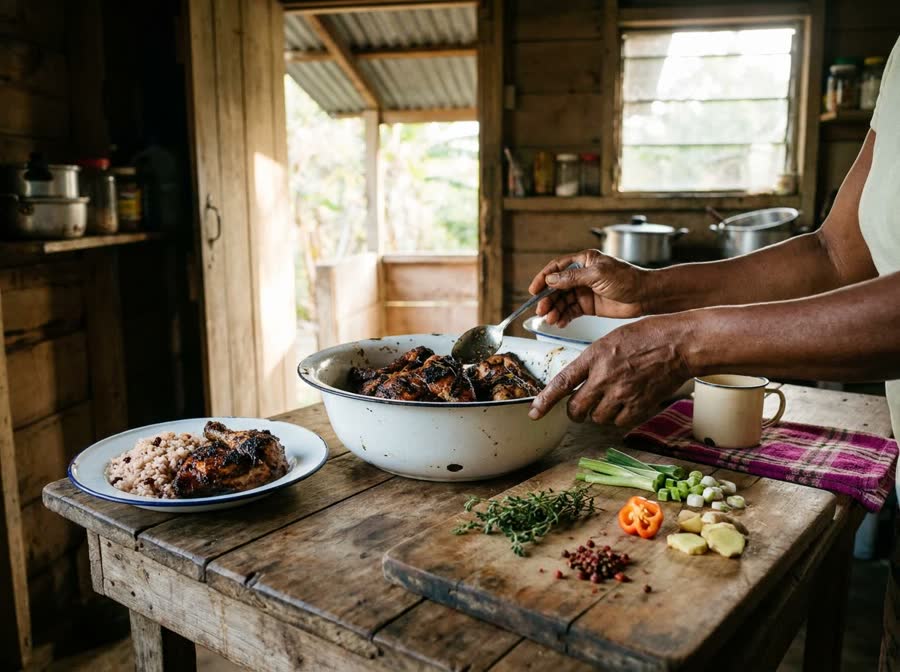
Not a glossy cookbook. A working kitchen, written down.

The real measurements

Cups, spoons, minutes and temperatures — the “how much” a video never gives you. When your hand learns it, put the cups away.

The keeping methods

Eight chapters on what nobody teaches: heat, damp, the freezer, the fridge, the shelf — and a whole chapter on the days the current goes off.

The arithmetic, not a promise

Every price is a range from my own shopping, added up out loud and then handed to you with a blank column. Check every number at your own shop.

A four-week plan

Saturday you season up. Sunday you cook the pot. Monday and Tuesday it becomes something else. Four weeks written out, with the shopping for each.

Cook for one, or stretch for six

Every recipe carries a line for making it smaller or making it go further — including how a quarter-pound of saltfish flavours a plate for four.

Large print, said properly

Big numbered steps you can read across the kitchen, and every dish, pot and bush named correctly, with a page on how to say it.

Everything that is inside

8 parts · 80 numbered recipes · 8 method chapters · the four-week plan · the one-page ledger.

1
The MethodThe pot, seasoning up, low fire, keeping food in heat, the freezer, the fridge, the shelf, and when the current goes.
2
The FoundationsSeasoning base, coconut milk, browning, rice and peas, dumpling, hard food, bammy, pot liquor.
3
Never Buy It AgainSixteen things made at home — each with the shop price beside the real cost. Ends with the ledger.
4
One Pot, Three DaysCook-up, stew peas, the soups, oxtail, curry goat, brown stew — and what each becomes on Monday.
5
The Everyday PlateJerk, curry, escovitch, steamed fish, ackee and saltfish, callaloo, rundown.
6
Morning and Hard FoodThe porridges, fritters, fried plantain, roast breadfruit, bammy and fish, chocolate tea.
7
Sweet, and What We DrinkSweet potato pudding, gizzada, grater cake, coconut drops, duckunoo, the juices and the teas.
8
The Money PartThe 23 groceries, what a week costs, where the money actually is, the four-week plan, the yard shelf, the ledger.

A peek inside

Every recipe in the book is photographed. Here are nine of the eighty.

Rice and peas
Rice and Peas — the Sunday rice, with the whole pepper left unbroken on top
Jerk chicken
Jerk Chicken — without a jerk pan, and what you gain and lose
Escovitch fish
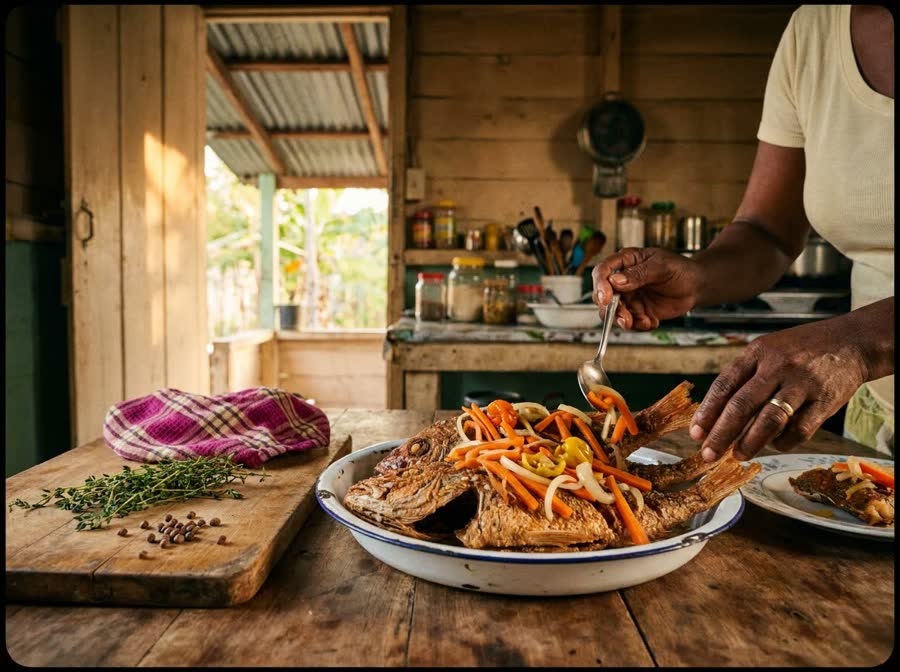
Escovitch Fish — why the fish must be dry and the pickle must go on hot
Oxtail with butter beans
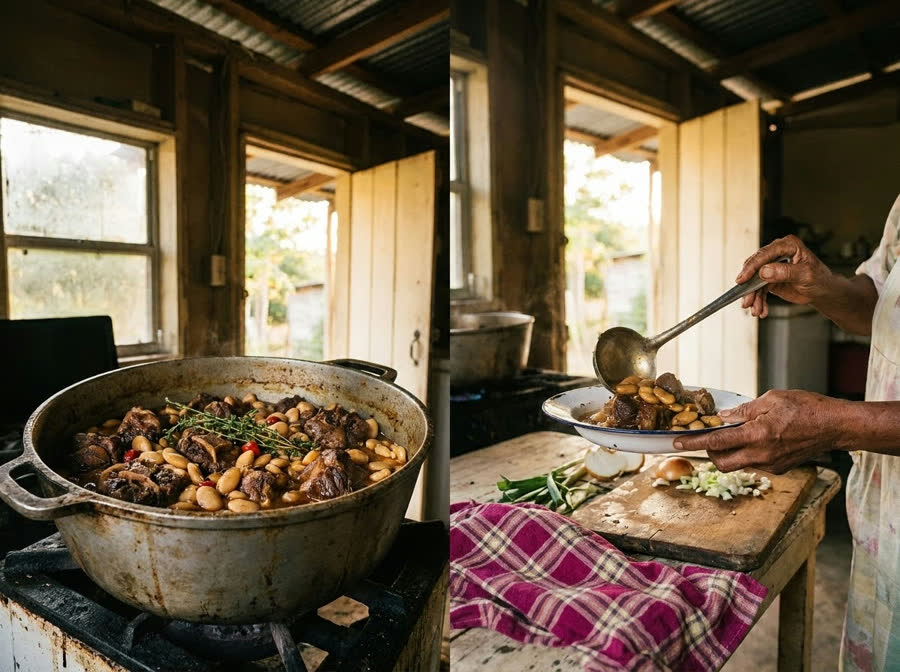
Oxtail — a Sunday price, and the three days it honestly feeds
Grating a dry coconut
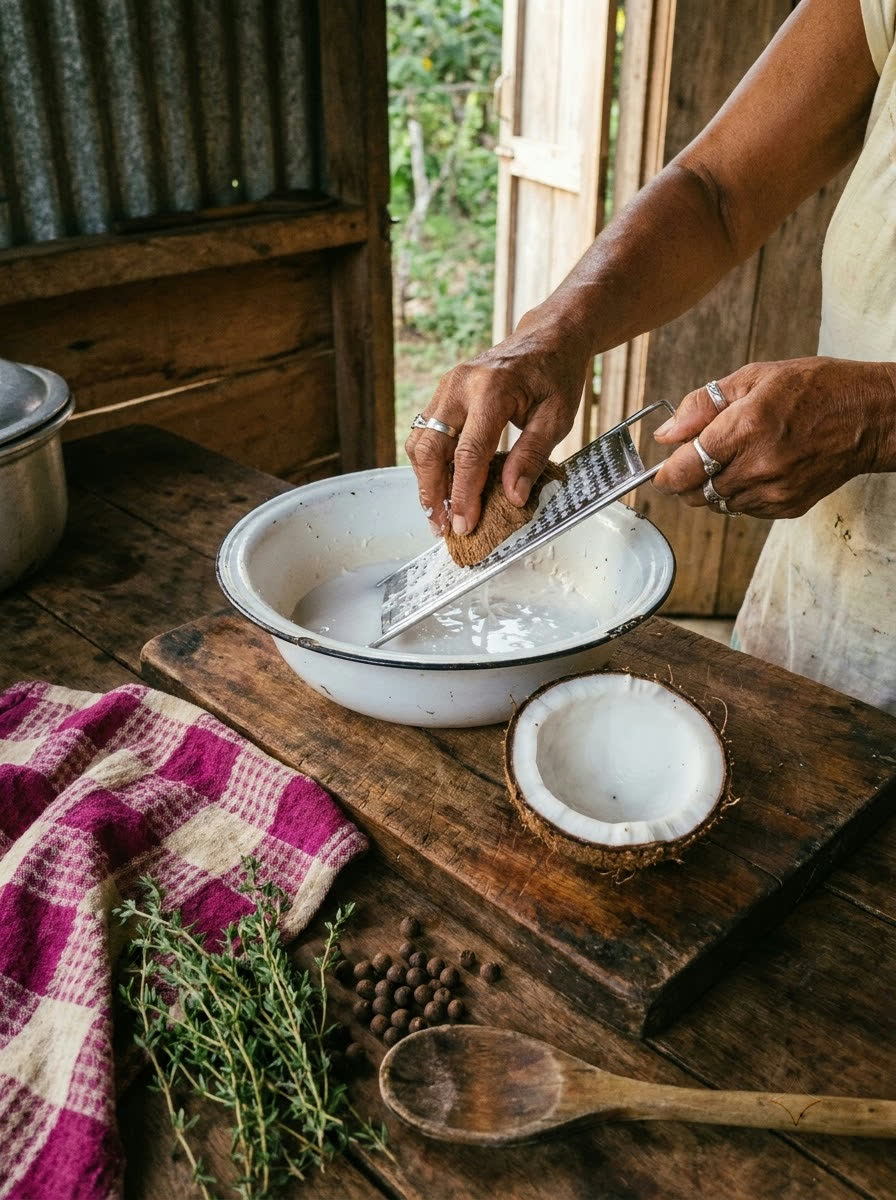
One coconut, three things — the milk, the oil, and the grated coconut for a grater cake
Sweet potato pudding
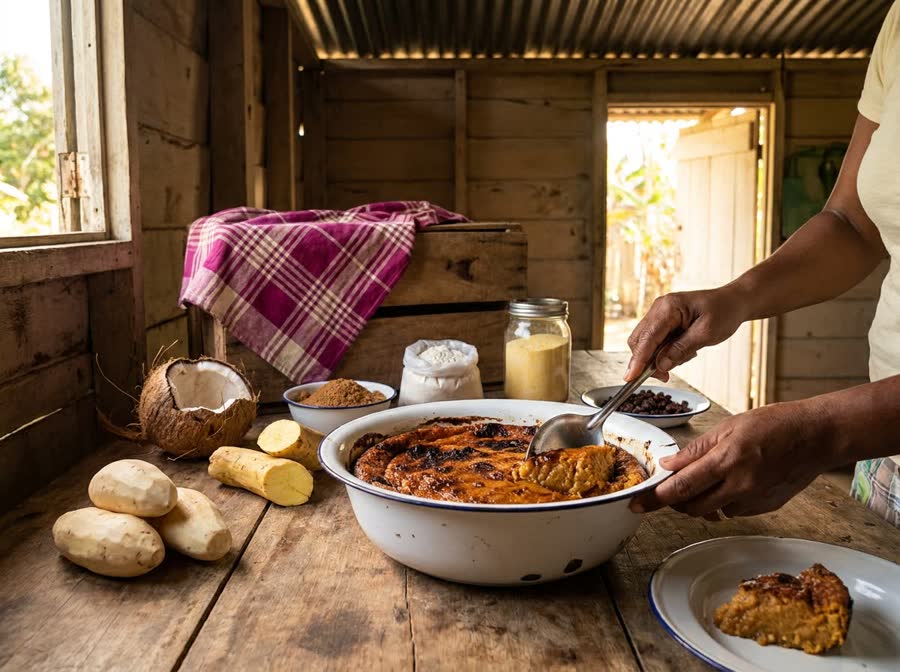
Sweet Potato Pudding — hell a top, hell a bottom, hallelujah in the middle
Hard-dough bread
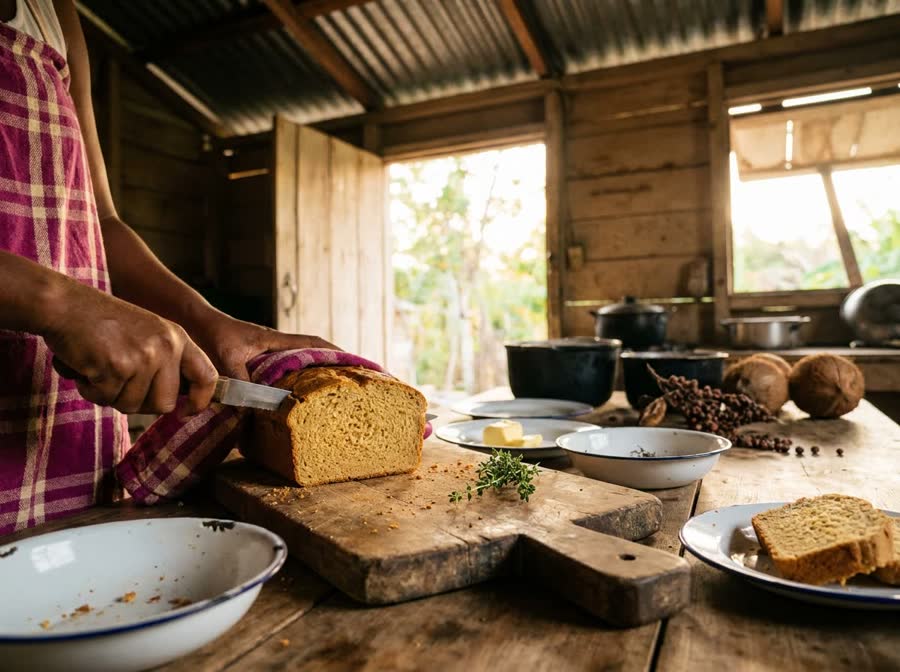
Hard-Dough Bread — a loaf costs about a dollar of flour, sugar and yeast
The dutch pot
The pot decides — the first of eight chapters on method, before a single recipe
Sorrel drink
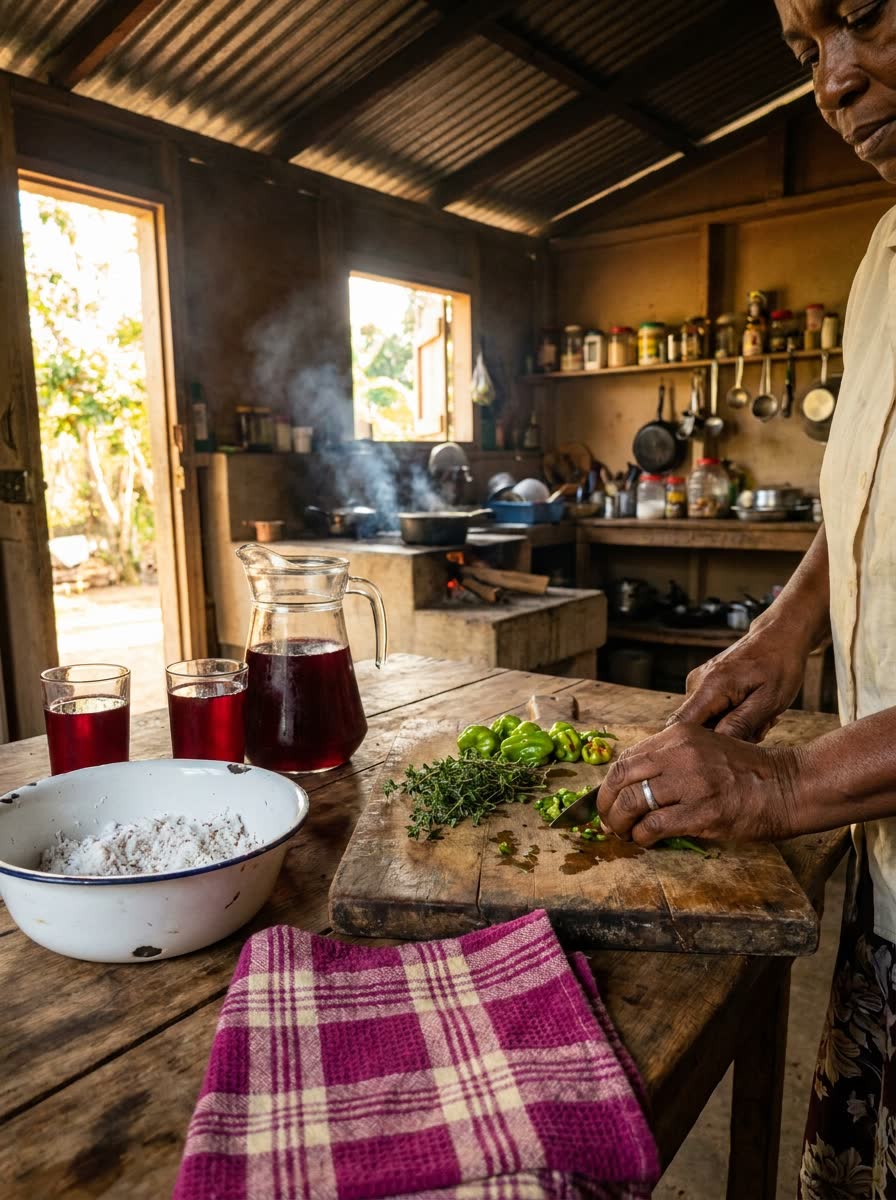
Sorrel — two ounces of dried sorrel makes close to a gallon

Get the book — $37

Get your copy today

One payment. Yours forever. On your phone in about a minute.

Instant Digital Download
80 recipes, measured, one to a page, every one photographed—
8 method chapters — keeping food in heat, damp, the freezer, the shelf, and no current at all—
The never-buy ledger — 16 items, my prices, a blank column for yours—
The four-week plan — Saturday, Sunday, and what the pot becomes—
The 23-grocery short list, priced and added up out loud—
250+ pages, large print, phone, tablet, computer or printed at home—
Regular price$57
$37today, during the launch window
Get Instant Access — $37

Launch price ends in --d --h --m --s

Seven days, no argument. Read the whole thing. If it is not for you, email us inside seven days and we will refund every penny — and you keep the book. I would rather you kept it than felt you had been sold something.

Questions

How do I get the book?

The moment you order you get an instant download — no waiting for the mail. Read it on any phone, tablet or computer, or print it at home.

Will it really save me money?

I will not promise you a figure, because I do not know your shop. What the book does is show you my arithmetic, item by item, with the shop price beside what it cost me to make — and then leave you a blank column to put your own prices in. In my kitchen the sixteen never-buy items work out somewhere around $85 to $110 a month. Yours will be a different number, and the book is built so you can work it out yourself instead of taking my word.

Are these real Jamaican recipes, or somebody's idea of them?

Real, and named correctly — pimento is allspice, callaloo is amaranth, rice and peas is made with red peas and coconut milk, and where a habit belongs to one district or one generation I say so instead of speaking for the whole island.

Are the recipes hard? I am not a confident cook.

No. Large print, six to ten big numbered steps, real measurements, and one “Granny Ruby's Trick” at the end of each recipe — the single thing that decides whether it comes out right. Many recipes also carry a smaller version for cooking for one.

Is this a diet or health book?

No, and it does not pretend to be. It is a cookery book from one woman's kitchen. The drinks and teas are shared as tradition and taste, never as treatment for anything — those questions belong to your own doctor.

Is the food-preserving safe?

Where a traditional method is not safe by what we know now, I say so on the page and give you the way that keeps instead. Times, temperatures and limits follow current USDA and NCHFP guidance, and every method comes with its honest limit stated out loud.

What if it is not for me?

Email us inside seven days and we refund every penny, and you keep the book.